

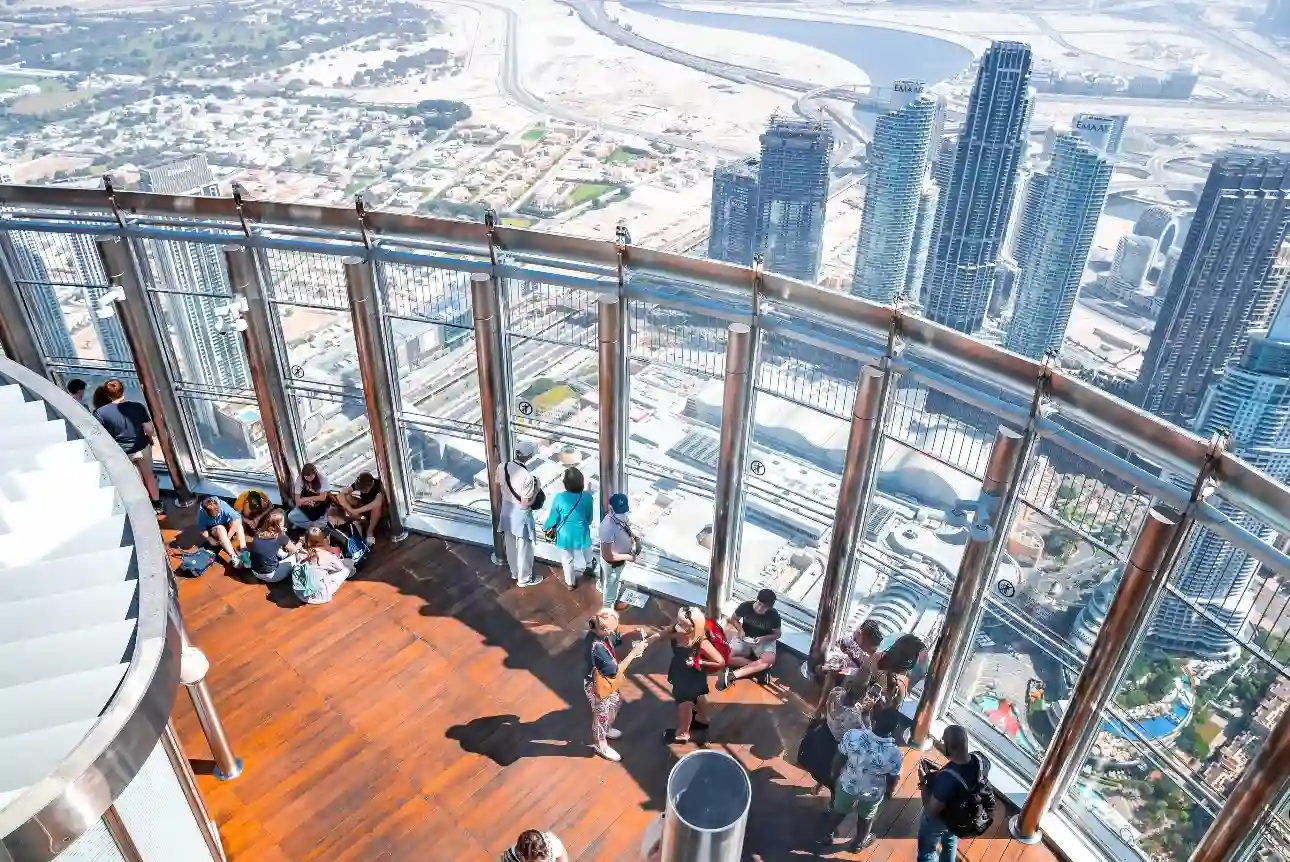
The building serves as a hotel, residential complex, office space, restaurant, and observation deck all in one. The highest floor open to the public is floor 154, part of The Lounge at 585 metres.
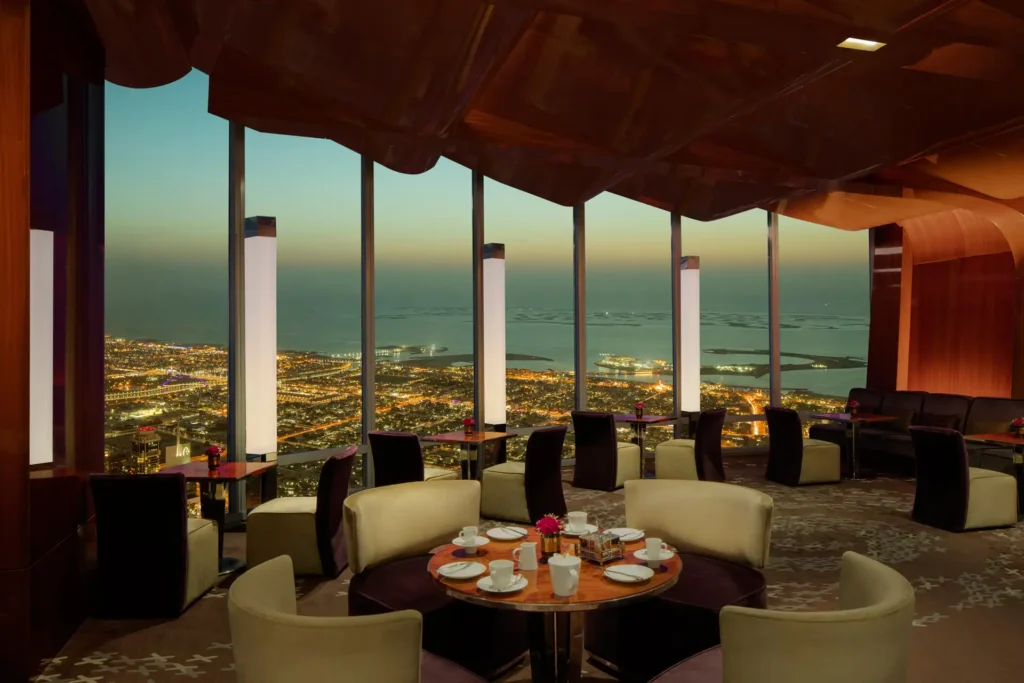
Floors 124, 125, and 148 are home to the At The Top and At The Top SKY observation decks, and floor 122 holds At.mosphere, the world’s highest restaurant.

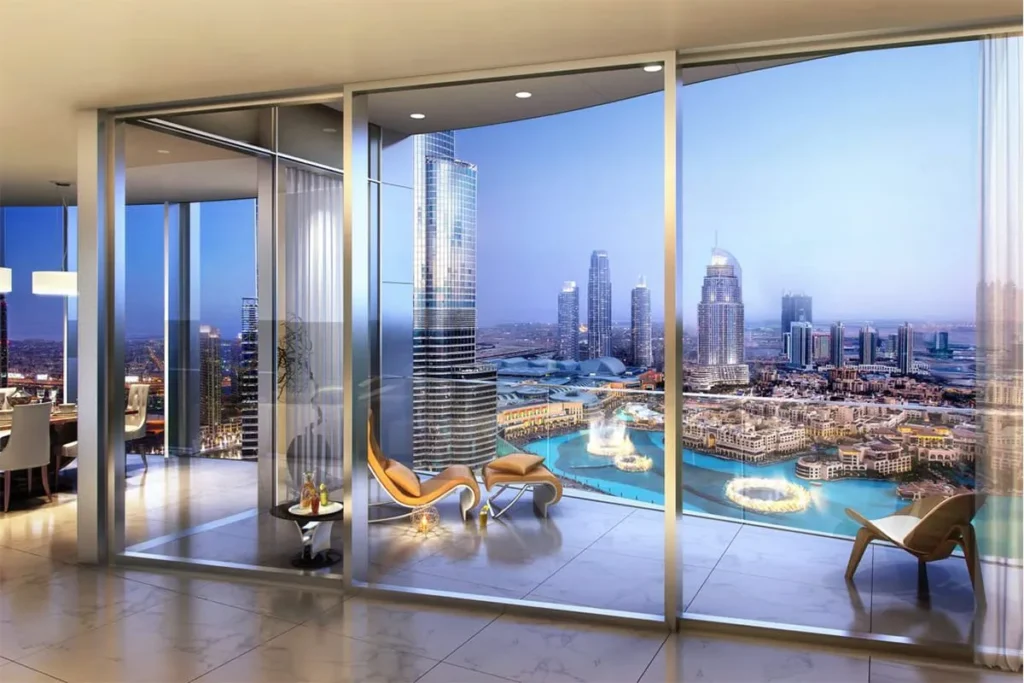
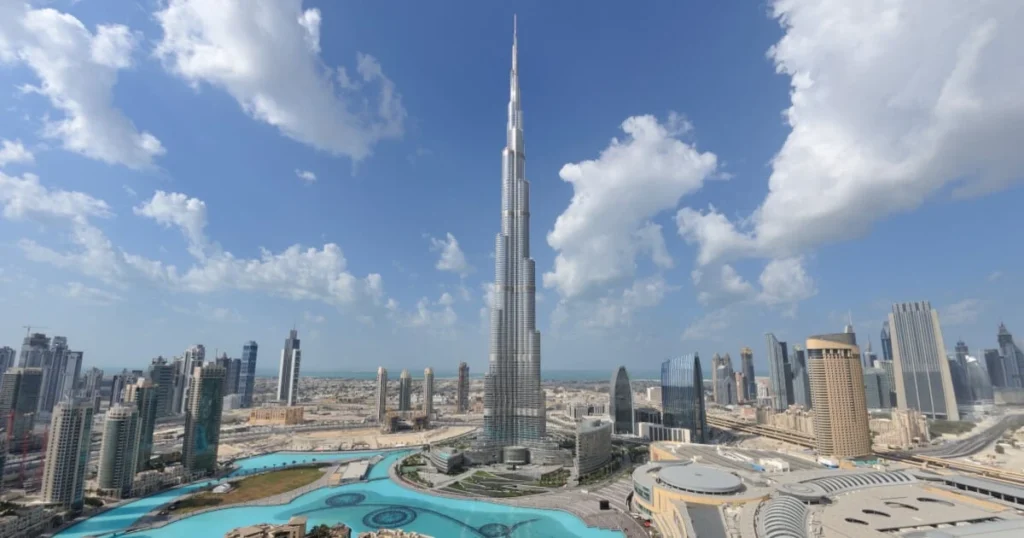
With 163 floors packed into 828 metres, the Burj Khalifa is not just a building. It is a vertical city. A hotel sits at the bottom. Luxury apartments fill the middle. Offices, restaurants, and world-record observation decks occupy the upper levels.
And a set of mechanical floors keeps it all running silently in the background.
This guide walks you through every section of the building, floor by floor, with exact heights in metres and feet, ticket prices, lift details, and answers to the most common questions people ask about the Burj Khalifa floor plan.
How Many Floors Does the Burj Khalifa Have?
The Burj Khalifa has 163 floors above ground. That is the official floor count confirmed by the Council on Tall Buildings and Urban Habitat (CTBUH) and Guinness World Records. It also has 2 basement levels below ground, bringing the total floor count to 165 levels in the full structure.
Quick Reference: Burj Khalifa Floors by the Numbers
| Stat | Number |
|---|---|
| Total floors above ground | 163 |
| Basement levels | 2 (B1 and B2) |
| Habitable floors | Around 154 |
| Mechanical floors | 9 (floors 155 to 163) |
| Highest public floor | Floor 154 (The Lounge) |
| Highest observation deck floor | Floor 148 (At The Top SKY) |
| Total stairs | 2,909 steps (ground to floor 160) |
| Total lifts | 57 elevators and 8 escalators |
163 Floors vs 209 Floors: What Is the Difference?
You may have seen the number 209 mentioned in technical articles about the Burj Khalifa. This comes from counting the non-habitable structural levels inside the spire above floor 163. These levels are not real floors in any usable sense.





They are steel and concrete framing sections that make up the spire structure. Nobody lives or works there, and they do not appear on the building’s floor plan. The official Burj Khalifa floor count is 163.
Does the Burj Khalifa Have a 13th Floor?
No, the Burj Khalifa does not have a 13th floor. The building skips the 13th floor entirely. This is a common practice in many buildings around the world, as the number 13 is considered unlucky in several cultures. Floors also skip numbers 41, 74, 110, and 137 in the lift system for operational and zoning reasons. So while the building is numbered up to 163, the actual floor count adjusts slightly for these skipped numbers.
Burj Khalifa Floor Height: How Tall Is Each Floor?
Not every floor in the Burj Khalifa is the same height. The building tapers as it rises, and the floor-to-ceiling heights change depending on what the floor is used for.
- Hotel floors (ground to floor 39): around 4.5 to 5.0 metres per floor
- Residential floors (floors 19 to 108): around 4.0 metres per floor
- Office floors (floors 109 to 154): around 3.9 metres per floor
- Mechanical floors: around 4.5 to 6.0 metres (taller to fit equipment)
The average floor-to-floor height across the building works out to roughly 3.9 metres (12.8 feet). In feet, that is about 12 to 16 feet per floor depending on the zone.
One interesting fact: the temperature at the top of the Burj Khalifa is about 6 degrees Celsius cooler than at ground level. This temperature difference is one of the reasons the building’s air conditioning and water systems are so complex.
For a full breakdown of the height figures at different levels, check out our detailed guide on Burj Khalifa height.
Complete Burj Khalifa Floor-by-Floor Breakdown
The Burj Khalifa is split into five main zones: hotel and lower residences, mid-level residences, corporate offices, public attractions, and mechanical floors. Here is what sits on every section of the building.
Basement Levels B1 and B2: Parking
The two basement levels hold a large parking facility for residents, hotel guests, and visitors. The basements also serve as storage and service access points for deliveries and building operations.
Ground Floor and Concourse Level: Main Entrance
The ground floor and concourse level form the main entrance to the building. The lobby has polished marble floors, high-end finishes, and a large chandelier. From here, visitors can access the Armani Hotel check-in, the entrance to the At The Top observation decks, the ballroom, function rooms, and the connection to Dubai Mall next door. Security is handled at this level before you go up.
Floors 1 to 8: Armani Hotel Dubai
The lower floors of the Burj Khalifa house the Armani Hotel Dubai, designed by Giorgio Armani. The hotel has 304 rooms and suites, all styled in the minimalist Armani design language. The hotel includes several restaurants such as Armani/Ristorante, Armani/Amal, and Armani/Hashi, along with a spa, pool, and private event spaces.
Floors 9 to 16: Armani Residences
Floors 9 to 16 are Armani Residences. These are private residential apartments designed by Giorgio Armani. They are separate from the hotel but share the same design philosophy and building services.
Floors 17 and 18: Mechanical
Floors 17 and 18 are dedicated to mechanical systems. These floors house electrical substations, water pump units, and air handling equipment that serve the lower sections of the building.
Floors 19 to 37: Residential Apartments
Floors 19 to 37 are residential apartments. These units form part of the Burj Khalifa’s broader residential offering, sitting above the Armani zone but below the mid-tower residences.
Floors 38 and 39: Armani Hotel Suites
Floors 38 and 39 return to the Armani Hotel, housing its upper-level suites. Guests at this height get views across Dubai that the lower hotel floors cannot offer.
Floors 40 to 42 and 73 to 75: Mechanical Floors
These sets of floors are full mechanical floors. You can spot them on the outside of the building as darker horizontal bands. Inside, they hold electrical substations, water tanks, air handling units, and all the equipment that keeps the residential and hotel zones above and below running. These floors typically serve the 15 floors above and below them.
Floors 43 and 76: Sky Lobbies
Sky lobbies are transfer floors where you change from one elevator group to another. Floor 43 includes a swimming pool, gym, and lounge area for residents in the lower residential zone. Floor 76 has the same setup for residents in the mid-level residential zone, also with a swimming pool. These sky lobbies are not open to the general public.
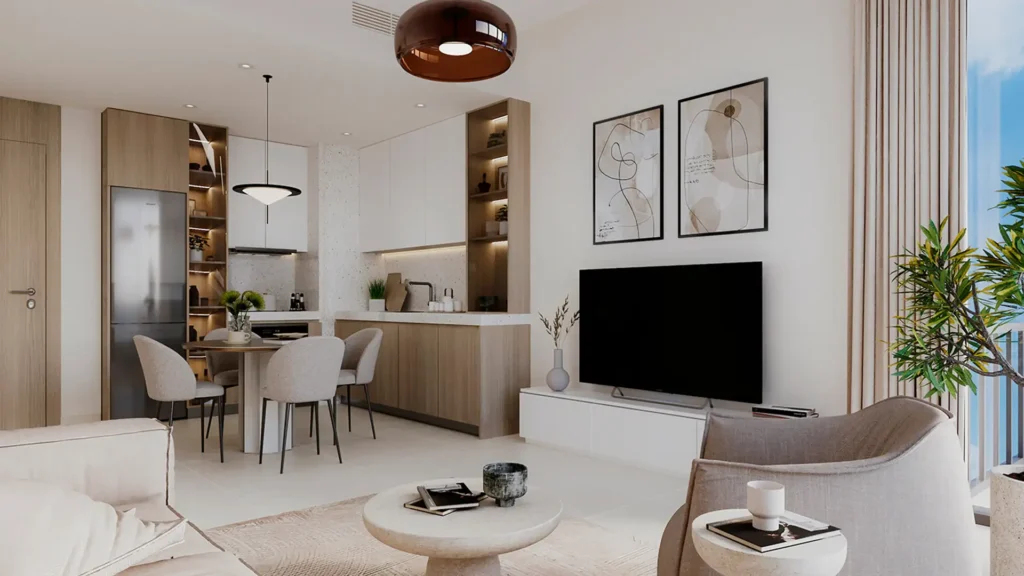
Floors 44 to 72 and 77 to 108: Residential Apartments
These are the main residential floors of the Burj Khalifa. Together, floors 44 to 72 and 77 to 108 hold over 900 private apartments. The Burj Khalifa floor plan for these levels includes studio units, one-bedroom, two-bedroom, three-bedroom, and four-bedroom apartments. All units have floor-to-ceiling windows. Residents on these floors get access to the sky lobbies, pools, and gyms on floors 43 and 76.
Floors 109 to 154: Corporate Office Suites
The upper third of the Burj Khalifa is largely corporate office space. Floors 109 to 154 hold high-end business suites and offices available for rent. These levels are split into smaller sub-zones with the corporate floors running across floors 111 to 121, 126 to 135, 139 to 147, and 149 to 151.
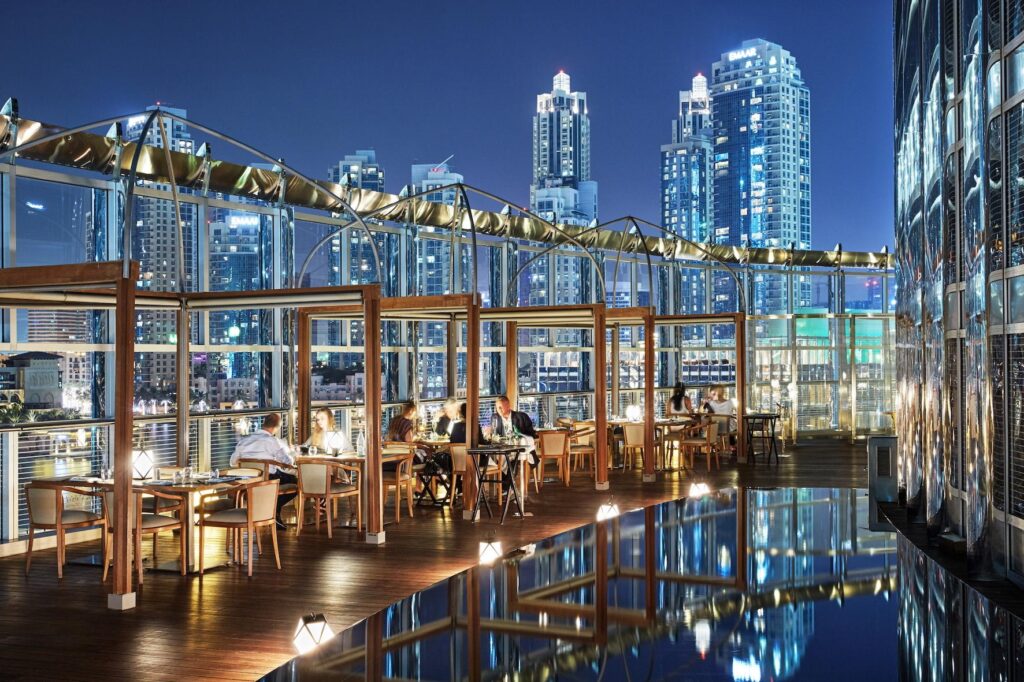
Floor 122: At.mosphere Restaurant (442 m / 1,450 ft)
Floor 122 is home to At.mosphere, the world’s highest restaurant. It sits at 442 metres (1,450 feet) above the ground. The restaurant offers full fine dining and a lounge menu. Lunch and dinner reservations are available, and a visit counts as a public way to access a high floor of the Burj Khalifa without buying a standard observation deck ticket.
Floor 123: Sky Lobby for Upper Levels
Floor 123 is a sky lobby that serves the upper corporate and observation sections of the building. It is an elevator transfer point and also includes a lounge area. This is where visitors taking the double-deck express lifts to the observation decks arrive before being directed up to floors 124 and 125.
Floors 124 and 125: At The Top Observation Deck (452 to 456 m / 1,483 to 1,496 ft)
Floors 124 and 125 are the At The Top observation deck, the most popular visitor experience in the building. Floor 124 sits at 452 metres (1,483 feet) and includes an indoor gallery with exhibits on the building’s construction. Floor 125 sits at 456 metres (1,496 feet) and has an outdoor terrace. Both floors offer 360-degree views of Dubai, the Arabian Gulf, and the surrounding desert.
Floor 125 also has a VR attraction and a dedicated photo zone. The double-deck elevators used to reach floor 124 travel from the concourse level to floor 124 in under 60 seconds.
Floor 148: At The Top SKY (555 m / 1,821 ft)
Floor 148 is the At The Top SKY experience, the highest outdoor observation deck in the world. It sits at 555 metres (1,821 feet) above the ground. Access is limited and ticket numbers are capped, so it sells out often. Visitors get a hosted experience with a personal Guest Ambassador, a private lounge, and access to the outdoor terrace at this height.
Floors 152 to 154: The Lounge (585 m / 1,919 ft)
The Lounge on floors 152 to 154 is the highest publicly accessible space in the Burj Khalifa and the world’s highest lounge. It sits at around 585 metres (1,919 feet). Guests can enjoy food and drinks here with views that no other publicly accessible space on Earth can match.
Floors 155 to 163: Mechanical and Spire Base
Floors 155 to 163 are entirely mechanical. No guests, residents, or office workers use these floors. They hold the systems that manage the building’s top section, communications equipment, and the structural base of the spire. The 163rd floor is the highest numbered floor in the building and is off-limits to everyone except maintenance workers.
Want to know more about the building’s design and history? Our full guide to the Burj Khalifa: The World’s Tallest Building covers everything in detail.
Key Floors at a Glance: Height in Metres and Feet
Here is a quick-reference table for the most important floors in the building, with their heights in both metres and feet.
| Floor(s) | Use | Height (m) | Height (ft) | Public? |
|---|---|---|---|---|
| B1 to B2 | Parking | Below ground | Below ground | No |
| G to 8 | Armani Hotel | Ground level | Ground level | Hotel guests |
| 9 to 16 | Armani Residences | 33 to 62 m | 108 to 203 ft | Residents only |
| 19 to 37 | Residential | 75 to 145 m | 246 to 476 ft | Residents only |
| 40 to 42 | Mechanical | 157 to 167 m | 515 to 548 ft | No |
| 43 | Sky Lobby (pool) | 170 m | 558 ft | Residents only |
| 44 to 72 | Residential | 173 to 284 m | 568 to 932 ft | Residents only |
| 73 to 75 | Mechanical | 287 to 296 m | 941 to 971 ft | No |
| 76 | Sky Lobby (pool) | 299 m | 981 ft | Residents only |
| 77 to 108 | Residential | 302 to 422 m | 991 to 1,385 ft | Residents only |
| 109 to 121 | Corporate offices | 426 to 475 m | 1,398 to 1,558 ft | Leaseholders |
| 122 | At.mosphere Restaurant | 442 m | 1,450 ft | Yes (booking) |
| 123 | Sky Lobby | 448 m | 1,470 ft | Transfer only |
| 124 to 125 | At The Top deck | 452 to 456 m | 1,483 to 1,496 ft | Yes (ticket) |
| 126 to 154 | Corporate offices | 460 to 585 m | 1,509 to 1,919 ft | Leaseholders |
| 148 | At The Top SKY | 555 m | 1,821 ft | Yes (ticket) |
| 152 to 154 | The Lounge | 575 to 585 m | 1,886 to 1,919 ft | Yes (ticket) |
| 155 to 163 | Mechanical / Spire | 590 m and above | 1,936 ft and above | No |
Burj Khalifa Lift System: How Do You Move Between 163 Floors?
Moving people through 163 floors is a serious engineering challenge. The Burj Khalifa solves it with a system of 57 elevators and 8 escalators, all supplied and installed by Otis.
The Zone System
No single lift travels from the ground floor all the way to floor 163. That would be physically impossible with standard cable technology because the weight of the cables alone would be too heavy.
Instead, the Burj Khalifa divides the building into vertical zones. Each elevator group covers one zone. To travel between zones, you change lifts at a sky lobby, just like changing trains at a transit hub.
How Fast Do the Lifts Travel?
The fastest elevators in the Burj Khalifa travel at 10 metres per second (36 km/h). At that speed, you go from the ground floor to floor 124 in under one minute. The lifts also have pressure-equalisation systems to prevent ear discomfort from the rapid height change.
Double-Deck Elevators
The Burj Khalifa has double-deck elevators, where two cabins are stacked on top of each other and move at the same time. This doubles the number of people the lift can carry without using more shaft space. The double-deck express lifts serve the observatory floors from the concourse level.
Lift Groups by Zone
| 🛗 Lift Group | Floors Served | Type |
|---|---|---|
| Hotel lifts (H1 to H4) | Ground to floors 1 to 39 | Hotel passenger |
| Residential shuttle (R1 to R6) | Ground to floors 43 and 76 | Sky lobby express |
| Residential local (R7 to R12) | Floors 43 to 72 and 76 to 108 | Floor-by-floor local |
| Office express (OB1, OB2) | Concourse to floors 123 and 124 | Double-deck express |
| Office local (BO1 to BO6) | Floors 111 to 154 | Office floor service |
| Service lifts | Basement to floor 636.9 m | Maintenance only |
World Record: Longest Elevator Travel Distance
The main service elevator in the central core of the building holds the world record for the longest elevator travel distance. It travels 504 metres (1,654 feet) vertically in a single run. Another service lift in the spire reaches a landing point of 636.9 metres above ground, making it the world’s highest elevator landing point.
2,909 Stairs
For anyone who prefers not to use lifts, the Burj Khalifa has 2,909 steps from the ground to floor 160. These stairs are for emergency egress and staff use, not tourist access. Some charity stair climbs have taken place in the building over the years.
Burj Khalifa Floor Prices: How Much Does It Cost to Own or Rent?
The Burj Khalifa is one of the most prestigious addresses in the world. Prices reflect that.
Residential Apartments
Apartments in the Burj Khalifa start from around AED 1.7 million (approximately USD 463,000) for a studio. One-bedroom apartments typically start from around AED 2.5 million (USD 680,000). Two-bedroom units range from AED 4 million upwards. Three and four-bedroom apartments can reach AED 15 million or more depending on the floor and view.
The higher the floor, the higher the price. A unit on floor 80 will cost considerably more than a similar-sized unit on floor 30, purely because of the view and the prestige of the address.
Corporate Office Suites
Leasing a full floor of corporate office space in the Burj Khalifa is estimated at around USD 1.25 million per year for a standard office floor. Premium floors and suites command higher rates. The building is regularly cited as one of the most expensive office addresses in the Middle East.
Who Owns the Floors of the Burj Khalifa?
The Burj Khalifa is owned and developed by Emaar Properties, a Dubai-based real estate company. However, individual apartments and office suites within the building are sold or leased to private owners, companies, and investors from around the world.
The Armani Hotel floors are operated under a licensing agreement between Emaar and the Armani Group. So while Emaar owns the structure, hundreds of private individuals and businesses own or lease the floors inside it.
Visiting the Burj Khalifa: Which Floors Can You Go To?
Most of the Burj Khalifa’s floors are not open to the public. But there are three visitor experiences that let you access different heights, and a restaurant option for those who want to combine a meal with the view.
At The Top: Floors 124 and 125
This is the main observation deck and the most popular choice for visitors. Tickets cost 169 AED (around USD 46) during non-prime hours and 244 AED (around USD 66) during prime hours, which run from 3pm to 6:30pm. Prime-time tickets sell out days in advance during peak season.
At The Top SKY: Floor 148
At The Top SKY on floor 148 is a premium, limited-capacity experience. It includes a private lounge, a host guide, and access to the highest outdoor deck in the world. Tickets are priced higher than the standard At The Top experience and sell out quickly. Sunrise and sunset slots go first.
The Lounge: Floors 152 to 154
The Lounge is the highest point any visitor can access in the Burj Khalifa. It operates as a food and drinks lounge at 585 metres. Pricing is based on a minimum spend rather than a flat ticket price.
At.mosphere Restaurant: Floor 122
If you want a high-floor experience with a full meal, At.mosphere on floor 122 is the option. You book a table rather than buying a ticket. The restaurant is open for lunch and dinner, and the views are comparable to the observation deck just two floors above.
🎫 Book Early: All Burj Khalifa observation deck tickets sell out ahead of time, especially sunset and weekend slots. Do not leave booking until the day of your visit.
You can check current prices and book your visit on our Burj Khalifa Tickets page.
The Bottom Line on Burj Khalifa Floors
The Burj Khalifa has 163 floors, and no two sections of the building are quite the same. A luxury hotel fills the base. Hundreds of private apartments sit above it. Corporate offices occupy the upper middle. And at the very top, three public experiences let ordinary visitors stand higher than anywhere else on Earth.
Every floor serves a purpose. Even the mechanical levels at 40 to 42, 73 to 75, and 155 to 163 play a critical role in keeping the building’s water, power, and air systems running for everyone inside.
If you are planning to visit, the observation decks on floors 124, 125, and 148 are the main draws. Book your tickets early, especially if you want a sunset slot. The view from 555 metres is something that is hard to describe until you are standing there.
🗓️ Plan Your Visit: Book observation deck tickets early. Sunset and weekend slots sell out the fastest. Check availability now →
Frequently Asked Questions
1. How many floors does the Burj Khalifa have in total?
The Burj Khalifa has 163 floors above ground and 2 basement levels below. The top 9 floors (155 to 163) are mechanical. The total Burj Khalifa floors count including basements is 165 levels.
2. How many stories is the Burj Khalifa?
The Burj Khalifa has 163 stories above ground. The words ‘floors’ and ‘stories’ mean the same thing in this context. It holds the world record for the most floors in any building ever built.
3. What is the height of each floor in metres and feet?
Floor heights vary by zone. Hotel floors are around 4.5 to 5.0 metres (14.8 to 16.4 ft) each. Residential floors are around 4.0 metres (13.1 ft) each. Office floors are around 3.9 metres (12.8 ft) each. Mechanical floors are taller, around 4.5 to 6.0 metres (14.8 to 19.7 ft), to fit large equipment.
4. Does the Burj Khalifa have a 13th floor?
No. The Burj Khalifa skips the 13th floor due to the common cultural superstition around the number 13. The floor numbers jump from 12 to 14. Several other floor numbers are also skipped in the lift panel for zoning reasons, including floors 41, 74, 110, and 137.
5. What floor is the observation deck on?
The Burj Khalifa has two observation decks. At The Top is on floors 124 and 125 at 452 to 456 metres (1,483 to 1,496 ft). At The Top SKY is on floor 148 at 555 metres (1,821 ft). The Lounge on floors 152 to 154 is the highest publicly accessible space at 585 metres (1,919 ft).
6. How much does a floor in the Burj Khalifa cost?
Residential apartments in the Burj Khalifa start from around AED 1.7 million (USD 463,000) for a studio. Larger apartments and higher floors cost more. Leasing a full office floor costs approximately USD 1.25 million per year. Penthouse and premium floor prices run into the tens of millions of dollars.
7. Who owns the floors of the Burj Khalifa?
Emaar Properties developed the Burj Khalifa and owns the overall structure. Individual apartments and office suites inside are owned or leased by private buyers and companies from around the world. The Armani Hotel operates under a licensing deal with Emaar. Hundreds of private individuals and businesses effectively own the floors inside the building as unit owners or long-term tenants.
