

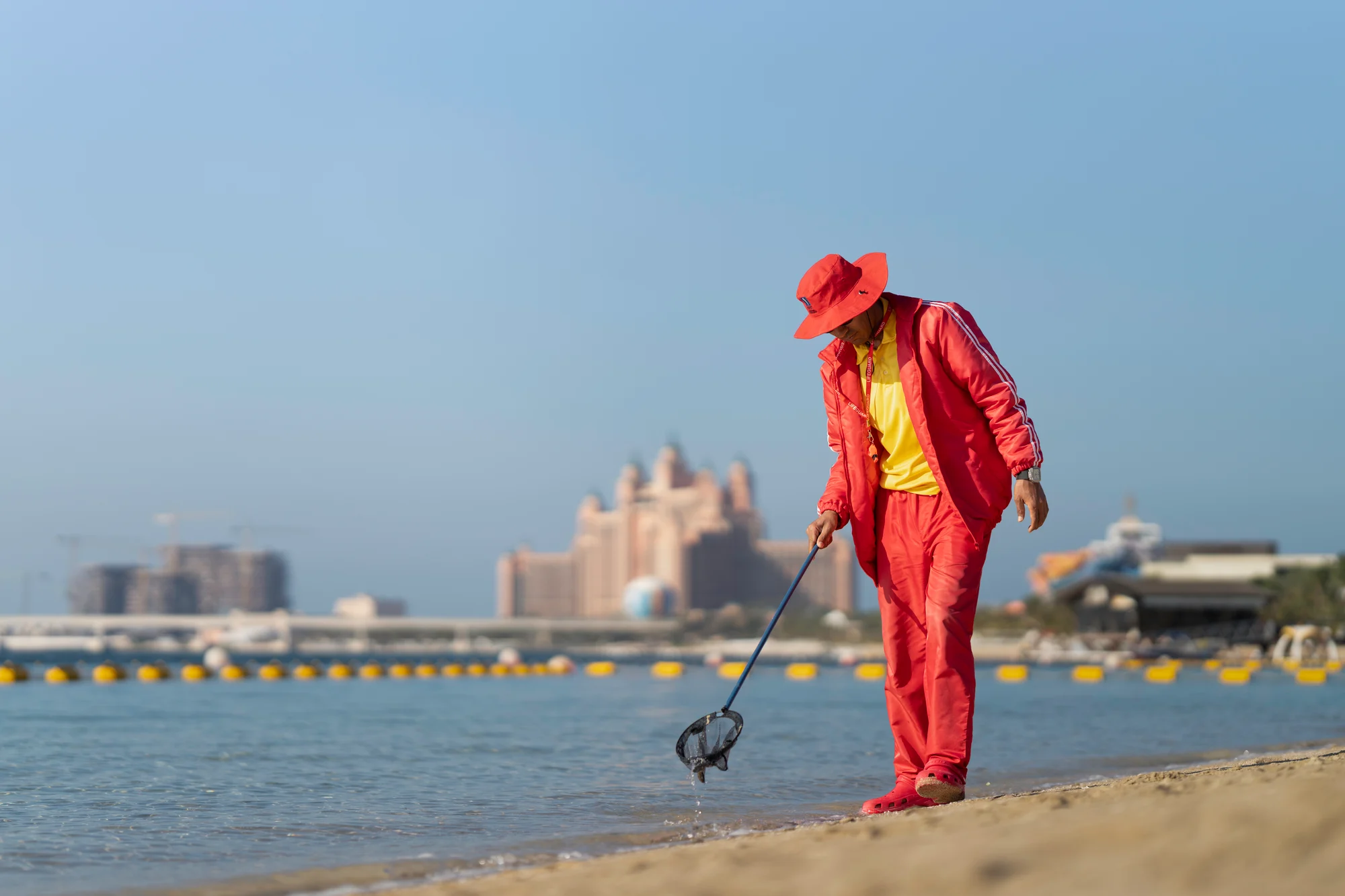
Towers are positioned at regular intervals along every managed beach and each lifeguard team keeps daily incident logs, attends safety briefings, and carries flotation devices, spinal boards, and first aid kits throughout every shift.
Dubai currently holds 8 Blue Flag certified public beaches, a globally recognised standard that independently verifies water quality, safety services, environmental management, and visitor facilities. The Blue Flag programme requires confirmed, qualified lifeguard coverage as a condition of certification. This means every Blue Flag beach in Dubai provides a higher standard of swimming supervision than most public beaches anywhere in the world.
| Feature | Details |
|---|---|
| Lifeguards at All Dubai Public Beaches | Yes, during daytime and evening hours |
| JBR Beach Lifeguard Hours | 7:30 AM to 8:00 PM daily |
| Kite Beach Lifeguard Hours | 7:30 AM to 10:00 PM daily |
| Jumeirah Public Beach Hours | 7:30 AM to 10:00 PM (Sun to Wed); to 11:00 PM (Thu and Fri) |
| Sunset Beach Lifeguard Hours | 7:30 AM to 10:00 PM daily |
| Al Mamzar Beach Park Hours | 8:00 AM to 10:00 PM (park operating hours) |
| La Mer Beach Lifeguard Hours | 8:00 AM to sunset |
| Night Swimming (Official) | Kite Beach, Jumeirah Public Beach, Sunset Beach |
| Night Swimming Lifeguards | No; night swimming is unsupervised after standard hours |
| Smart Power Floodlights | Installed 2017; Kite Beach, Jumeirah Public Beach, Sunset Beach |
| Green Flag | Safe to swim |
| Yellow Flag | Caution; weak swimmers stay shallow |
| Red Flag | No swimming |
| Double Red Flag | Beach closed; authorities present |
| Purple / Violet Flag | Dangerous marine life in water |
| Certification Authority | Dubai Municipality Public Health and Safety Department |
| International Standard | ISO17024 compliance |
| Licence Validity | 2 years (lifeguard); 3 years (first aid cert) |
| Renewal Requirement | Full 40-hour retraining |
| Key Training Providers | Blueguard Middle East, Swim US, Ocean Guard, MEBS |
| Lifeguard Equipment | Rescue tube, rescue board, spinal board, AED, first aid kit, radio |
| Emergency Number | 999 (Police and Ambulance) |
| Coast Guard Number | 800-COAST (800-26278) |
| AI Rescue System | Being integrated across upgraded beaches (2025 to 2026) |
| CCTV Cameras | 100+ being connected to central control rooms |
| Blue Flag Beaches | 8 certified public beaches in Dubai |
| Private Beach Lifeguards | Mandatory under Dubai Municipality regulations |
| Female Lifeguards | Available from select providers for ladies-only facilities |
| Rip Current Advice | Swim parallel to shore; do not fight the current |
| Children Rules | Under 10 must be with an adult at all times in the water |
| Alcohol and Swimming | No alcohol permitted before or during swimming |
| Best Beach for Families | Al Mamzar Beach Park (calm lagoon, multiple lifeguard zones) |
| Best Monitored Beach | Jumeirah Public Beach (longest lifeguard hours) |
Lifeguard Hours at Dubai Beaches
Knowing the exact lifeguard hours before you arrive is the most important practical piece of beach safety information you can have. Here is the full 2026 breakdown by beach:






| Beach | Lifeguard Hours | Night Swimming Permitted |
|---|---|---|
| Jumeirah Public Beach | 7:30 AM to 10:00 PM (Sun to Wed, Fri); 7:30 AM to 11:00 PM (Thu and Fri) | Yes (floodlit) |
| Kite Beach | 7:30 AM to 10:00 PM daily | Yes (floodlit) |
| JBR Beach | 7:30 AM to 8:00 PM daily | No official night swimming |
| Sunset Beach | 7:30 AM to 10:00 PM daily | Yes (floodlit) |
| Al Mamzar Beach Park | 8:00 AM to 10:00 PM (park hours) | Seasonal |
| La Mer Beach | 8:00 AM to sunset daily | No |
No beach in Dubai has lifeguards on duty through the night at any point in the year. Floodlit beaches including Kite Beach, Jumeirah Public Beach, and Sunset Beach permit night swimming, but the responsibility for personal safety shifts entirely to the swimmer after lifeguard hours end. Always check the current flag at the lifeguard tower before entering the water regardless of how early or late you arrive.
The Beach Flag System in Dubai
The swimming flags Dubai beaches use follow an internationally recognised colour code that is consistent across every managed beach in the emirate. Understanding the flags takes under a minute and can genuinely save your life. Flags are displayed at lifeguard towers and at designated beach entry points throughout the day.
A green flag means conditions are safe and swimming is permitted without restriction. A yellow flag signals caution; the water is open but weaker swimmers and children should stay in shallow areas. A red flag means conditions are dangerous and no swimming is permitted under any circumstances regardless of your swimming ability or experience. A double red flag indicates the beach is completely closed to swimming; Dubai Police or the Coast Guard may be present at the waterline.
A purple or violet flag is raised when dangerous marine life including jellyfish or stingrays has been spotted in the swimming zone. This flag does not always mean swimming is stopped, but entering the water is strongly inadvisable until the flag is lowered. Always ask the nearest lifeguard for clarification if you are unsure what the current flag means for your safety before entering the water.
What Lifeguards Do at Dubai Beaches
Lifeguards at Dubai public beaches do significantly more than watch the water from a tower. Each lifeguard monitors swimmers actively through the full designated zone using elevated tower positions that give clear sightlines across the entire beach. During peak hours when crowd density increases, lifeguards also patrol along the shoreline on foot to maintain close-proximity coverage of all swimming activity.
They are trained to identify hazards before they become emergencies. Rip current identification, submerged obstacle awareness, unusual wave patterns, jellyfish presence, and offshore wind shifts are all assessed continuously throughout the shift. Equipment carried at all times includes flotation rescue tubes, rescue boards, spinal boards for water entry injuries, first aid kits, and two-way radios for communication with neighbouring towers and the Dubai Corporation for Ambulance Services (DCAS).
When a water emergency occurs, lifeguards administer immediate CPR, AED defibrillation, and first aid on the beach while emergency services are contacted and en route. Daily activity logs are submitted after every shift and incidents are reviewed in team safety briefings the following morning. Multi-language communication is maintained at tourist-heavy beaches including JBR and Kite Beach, where staff cover English, Arabic, Hindi, and other common visitor languages.
Designated Swimming Zones and Safety Buoys
Every Dubai Municipality-managed beach uses clearly marked swimming zones separated from water sports and non-swimmer areas by orange buoys, ropes, or both. These zones exist because the combination of jet skis, kitesurfers, and casual swimmers in the same water space without separation creates a serious collision risk. Lifeguards actively direct swimmers back into the correct zone throughout their entire shift.
Children’s shallow swimming zones are marked separately at family-heavy beaches including Al Mamzar Beach Park and Kite Beach. These zones have stricter lifeguard vigilance during the hours when families with young children are most active. Surfers at Sunset Beach have a designated zone that is separated from the standard swimming area by a clear buffer, which is why that beach is one of the only public beaches in Dubai where surfing is officially permitted.
Swimming outside the marked zone is against Dubai beach regulations and can result in a fine under UAE public safety laws. Water sports operators are required to stay entirely within their designated activity zones as well. If you see any motorised water activity within the swimming buoy zone, report it to the lifeguard on duty immediately.
Lifeguard Coverage: Beach by Beach
Kite Beach
Kite Beach Dubai is consistently cited in guest reviews as having one of the most visible and responsive lifeguard setups among all free public beaches in the city. Towers are spaced to cover the full active beach stretch and night swimming is officially permitted under Smart Power floodlights installed in 2017. The combination of an active kitesurfing community, water sports operators, and casual swimmers in the same area makes the lifeguard management here more complex than at most other public beaches.
Kite Beach Dubai also runs a beach skatepark, volleyball courts, and an outdoor gym alongside the water zone, and lifeguards coordinate with the overall facility management team to ensure the full beach environment is monitored throughout each shift.
JBR Beach
JBR Beach Dubai has lifeguard stations positioned along the full JBR beach frontage from the Marina end through to the Bluewaters stretch. Sea conditions here can be noticeably choppier than beaches further south along the Jumeirah coast due to the open waterway traffic from the Marina. Water sports activity from multiple operators concentrates along this stretch of beach, which means lifeguards manage simultaneous supervision of jet skiing zones, swimming zones, and casual beach access throughout peak hours.
The lifeguard coverage at JBR ends earlier at 8:00 PM compared to the 10:00 PM or later schedule at Jumeirah Public Beach and Kite Beach. This is an important detail for visitors who plan an evening swim after dinner since the water is not supervised after that hour at JBR.
Jumeirah Public Beach
Jumeirah Public Beach has the most extended lifeguard coverage of any free public beach in Dubai. Standard hours run from 7:30 AM to 10:00 PM. On Thursdays and Fridays the coverage extends to 11:00 PM, reflecting the higher visitor numbers those evenings bring. The beach is Blue Flag certified and the lifeguard standards here are independently verified against international Blue Flag criteria annually.
Monday priority hours from 7:30 AM to 5:30 PM for women and children are maintained with lifeguard presence throughout. Night swimming is permitted here under the Smart Power floodlighting system and the beach is open 24 hours for access, though swimming after 10:00 PM or 11:00 PM on applicable days carries personal risk with no supervised coverage available.
Al Mamzar Beach Park
Al Mamzar Beach Park Dubai covers five separate beach zones across a 106-hectare site and lifeguards are deployed across each beach during park operating hours from 8:00 AM to 10:00 PM. The park’s ladies-only days on Mondays and Wednesdays include lifeguard staffing adjusted to the female-only access periods. Night swimming is available seasonally at Al Mamzar, particularly during summer months when evening temperatures make the beach a popular cooling-down destination after sunset.
The park’s calm lagoon water conditions between the beach zones make this one of the safer swimming environments for families with young children. Lifeguard towers have clear sightlines across each lagoon and the separation between beach zones reduces the crowd density at any single lifeguard’s coverage area.
La Mer Beach
La Mer Beach Dubai has lifeguards on duty from 8:00 AM to sunset daily. The sheltered bay position between Pearl Jumeirah and Jumeirah Bay creates calmer water conditions than the open Gulf beaches at JBR and Umm Suqeim, which makes La Mer one of the more forgiving swimming environments for less confident swimmers and families with young children.
Swimming is not officially permitted after sunset here and no night swimming infrastructure exists at La Mer. The beach access area closes at the relevant sunset time and evening visitors to the development use the boardwalk and dining areas rather than the water zone.
Sunset Beach
Sunset Beach Dubai has lifeguards on duty from 7:30 AM to 10:00 PM daily and is one of three Dubai public beaches with official night swimming enabled by Smart Power lighting. The beach also manages a separately designated surf zone which is one of the only officially permitted surfing areas on any public beach in Dubai. Lifeguards at this location therefore supervise both a swimming zone and an active surf zone simultaneously during peak hours.
Lifeguard Companies in Dubai
The lifeguard company in dubai structure works through a licensing and contracting model. Dubai Municipality sets the certification standard and contracts qualified third-party companies to provide staffing at public beaches. All companies must employ staff certified by Dubai Municipality’s Public Health and Safety Department, with training aligned to the ISO17024 international certification standard.
Established providers operating in Dubai include MEBS Facility Services, Affordable Group, Blueguard Middle East, Swim US, Magnum Security, Ocean Guard Training Center, and ForeverBrave Security Services. Private venues including hotel beaches, beach clubs, and waterparks hire directly from these providers or employ their own in-house Municipality-certified staff. Female lifeguards are available through several of these providers for ladies-only swimming areas, residential pools, and private family facilities.
Lifeguard Certification in Dubai
Being a lifeguard in dubai requires passing a formal certification process that is significantly more demanding than pool supervision alone. The Beach Lifeguard Qualification is a separate and more advanced certification than the standard Pool Lifeguard Qualification. Beach certification requires a higher level of physical fitness, open water competency, and specialist knowledge that pool supervision does not.
Training covers rip current formation, wave type identification, beach flag and hand signal systems, two-way radio communication, crowd management, CPR, AED operation, and open water rescue techniques. Successful candidates receive a certificate approved by Dubai Municipality and the Dubai Corporation for Ambulance Services. The lifeguard licence is valid for two years and requires a full 40-hour retraining programme for renewal. The first aid certificate runs for three years independently.
Training is delivered by accredited providers including Blueguard Middle East, which operates from Sheikh Zayed Road, and Swim US, based in Al Barsha 1, among others. Both organisations train to standards recognised by the International Training and Certification Academy, which is accredited by DCAS and Dubai Municipality.
Lifeguard Standards at Private Beach Clubs
Every private beach club, hotel beach, and paid resort shoreline in Dubai is required to provide certified lifeguards during operating hours under Dubai Municipality regulations. This requirement applies regardless of the venue’s size or whether the beach is accessed by day pass or hotel stay. The lifeguard coverage at paid venues like Nikki Beach, Club Mina, Sofitel Palm Beach, and White Beach Atlantis is included in the access fee as a regulatory requirement, not an optional extra.
Private venue lifeguards typically manage a smaller and more controlled number of swimmers than public beach staff since capacity at private venues is limited. This creates a higher lifeguard-to-swimmer ratio than most public beaches, which is one of the practical safety advantages that paid beach access provides. For a full comparison of paid beach access options across Dubai including what each day pass covers, the guide to private beaches Dubai covers every major venue with pricing detail.
Beach Safety Rules Every Swimmer Must Know
Always swim between the flags and within the marked zone. Never enter the water when a red flag is flying, regardless of your swimming experience or confidence level. Children under 10 must be accompanied by a responsible adult at all times in the water at every Dubai beach without exception.
Never swim alone at any beach even during fully staffed lifeguard hours. Inform someone of your intentions if you plan to swim after the lifeguard shift ends at any location. Avoid consuming alcohol before or during any swimming session since alcohol impairs judgement and reaction time in the water significantly. If you feel a rip current pulling you away from the shore, do not panic and do not swim directly against it. Swim parallel to the shoreline until you are out of the current’s path, then angle back toward the beach.
Report any distress you see in the water to the nearest lifeguard tower immediately by shouting, waving, or running directly to the tower. Do not attempt a solo rescue in open water unless you hold a recognised lifesaving certification. Throwing any available flotation object toward a person in distress is the safest immediate action a non-trained person can take.
Night Swimming Safety
Night swimming is officially available at Kite Beach, Jumeirah Public Beach, and Sunset Beach under the Smart Power floodlighting installed by Dubai Municipality in 2017. The lights illuminate the full swimming zone from sunset to sunrise and the beach sand and walkways are accessible throughout the night at all three locations. Lifeguards are not on duty after 10:00 PM or 11:00 PM at these beaches even during the permitted night swimming windows.
Night swimming during summer months after 7:00 PM is one of the most popular ways Dubai residents use the beach when daytime temperatures make outdoor activity genuinely uncomfortable. The water temperature stays consistently warm at 28 to 30 degrees Celsius during summer evenings. Always go with at least one other person when swimming at night and stay within the lit swimming zone boundaries throughout.
AI-Assisted Beach Rescue – The 2025 and 2026 Upgrade
Dubai Municipality is integrating AI-assisted beach rescue systems across its upgraded beaches as part of the Dubai Urban Plan 2040 programme. Over 100 modern cameras are being connected to central control rooms monitored jointly by Dubai Municipality and Dubai Police. The AI system flags potential drowning events or swimmer distress automatically and alerts the nearest lifeguard unit on their two-way radio within seconds of detection.
This technology does not replace human lifeguards but adds a layer of automated monitoring that reduces the risk of a distress event being missed during busy periods when a lifeguard’s visual attention is divided across many swimmers. The integration is being rolled out as part of the wider beach upgrade megaproject that was 45 percent complete as of early 2025. All 8 Blue Flag beaches are expected to have the full AI-integrated safety system in place by the end of the upgrade programme.
What to Do in a Beach Emergency
Shout immediately toward the nearest lifeguard tower if you or someone near you is in difficulty in the water. Lifeguards are trained to respond to shouting and waving from the water and will reach you faster if alerted early rather than when a situation has already deteriorated. Never leave a person in distress alone in the water while you go for help; keep visual contact and shout while staying as close as you safely can.
Call emergency services immediately if the situation is serious. Dial 999 for Dubai Police and Ambulance. Contact the Dubai Coast Guard via 800-COAST (800-26278) for any maritime or open water emergency. After a rescue from the water, do not move any person who may have struck their head on a hard surface or entered the water from height until trained medical personnel instruct otherwise, as spinal injuries are an immediate risk in those circumstances.
Report all near-miss incidents to the lifeguard on duty even when no injury has occurred. Near-miss data collected across Dubai beaches informs safety planning decisions and helps identify sections of beach where tower positioning or zone marking needs adjustment.
Closing Thoughts
Dubai’s public beach safety infrastructure is among the most formally managed in the region, backed by 8 Blue Flag certifications, Municipality-certified lifeguard staffing at every managed beach, a standardised flag colour system, designated swimming zones, and now AI-assisted rescue technology being rolled out under the Dubai Urban Plan 2040 upgrade. Knowing the lifeguard hours, respecting the flag system, and following the basic swimming zone rules removes most of the risk from a day on any Dubai beach.
For a complete overview of everything available at Dubai’s public beaches including facilities, parking, water sports, and activities, the guide to public beaches in Dubai covers all the key information. If you are also planning water activities on your beach day, the guides to parasailing Dubai, beach volleyball Dubai, and camel riding Dubai beach all include safety and booking guidance alongside the activity detail.
Frequently Asked Questions
1. Do Dubai public beaches have lifeguards?
Yes. All Dubai Municipality-managed public beaches have certified lifeguards on duty during daytime and evening hours. Coverage runs from approximately 7:30 AM to 8:00 PM at JBR Beach and up to 11:00 PM at Jumeirah Public Beach on Thursdays and Fridays.
2. What do the beach flags mean in Dubai?
Green means safe to swim. Yellow means swim with caution. Red means no swimming permitted. Double red means the beach is closed. Purple or violet means dangerous marine life is present in the water.
3. What time do lifeguards finish at Dubai beaches?
JBR lifeguards finish at 8:00 PM. Kite Beach, Jumeirah Public Beach, and Sunset Beach lifeguards are on duty until 10:00 PM. Jumeirah Public Beach extends to 11:00 PM on Thursdays and Fridays. No beach has 24-hour lifeguard coverage.
4. Can you swim at night at Dubai beaches?
Yes, at Kite Beach, Jumeirah Public Beach, and Sunset Beach, which have Smart Power floodlighting. Night swimming at these three beaches is officially permitted after lifeguard hours end. All other Dubai public beaches are closed to swimming after sunset.
5. Are lifeguards compulsory at Dubai private beaches?
Yes. Dubai Municipality regulations require certified lifeguards at all private beach clubs, hotel beaches, and resort shorelines during operating hours. This applies to all paid and members-only beach venues across the city.
6. What should I do if I see someone drowning at a Dubai beach?
Shout toward the nearest lifeguard tower immediately and throw any available flotation object toward the person. Call 999 for police and ambulance and 800-26278 for the Coast Guard. Do not attempt a solo open water rescue unless you hold a recognised lifesaving certification.
7. How do I become a certified beach lifeguard in Dubai?
Complete the Beach Lifeguard Qualification through a Dubai Municipality-accredited provider such as Blueguard Middle East, Swim US, or Ocean Guard. The course covers open water rescue, rip currents, flag systems, CPR, and first aid. The certificate is valid for two years and must be renewed through a full 40-hour retraining programme.
