

Quick Facts
| Detail | Information |
|---|---|
| Tournament | Women’s T20 Asia Cup 2026 |
| Dates | August 28 – September 13, 2026 |
| Host | United Arab Emirates (Dubai) — first time as host nation |
| Venue | Dubai International Cricket Stadium |
| Teams | 8 (India, Pakistan, Sri Lanka, Bangladesh, UAE, Thailand, Hong Kong, Indonesia) |
| Defending Champions | Sri Lanka |
| Most Titles | India (7) |
| Marquee Fixture | India vs Pakistan — September 5 |
| Final | September 13 |
A Historic First for the UAE
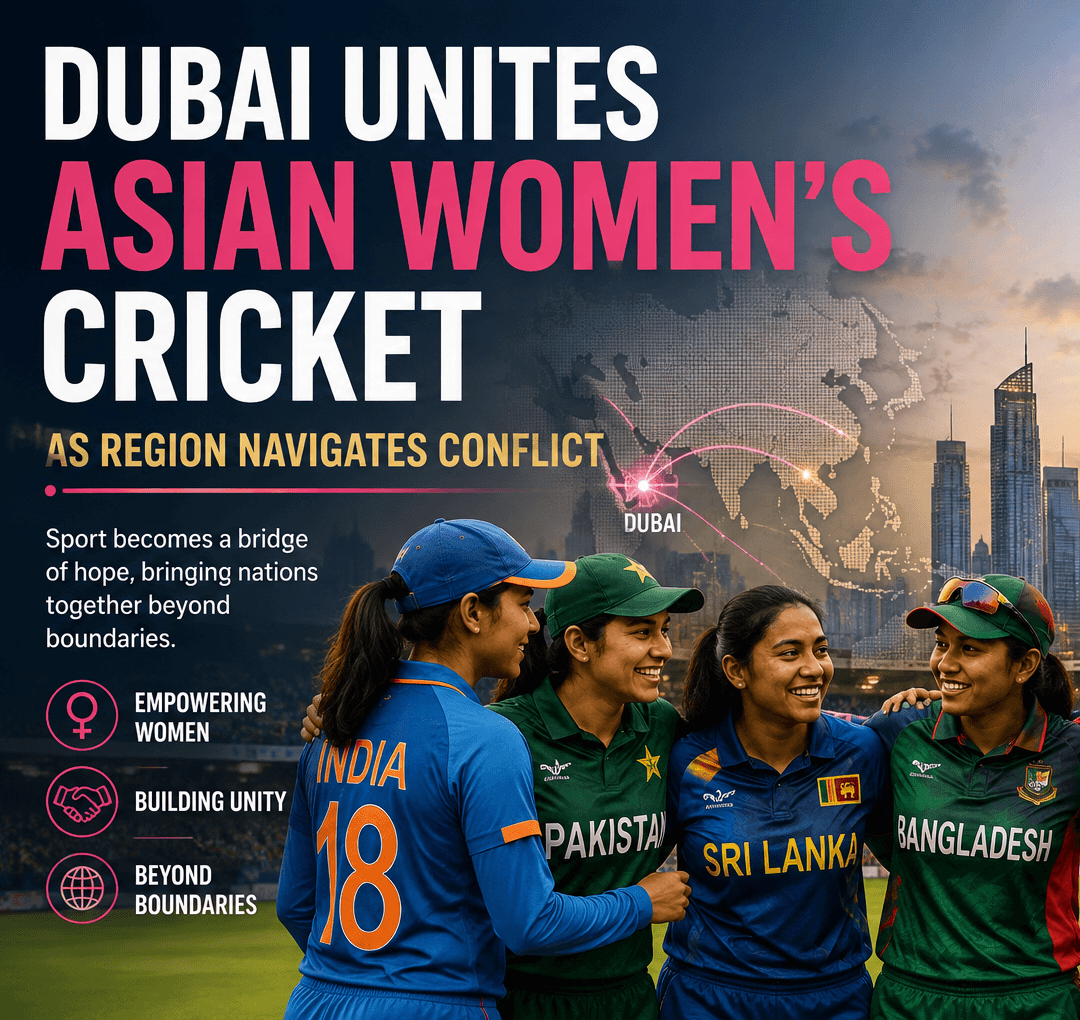
Eight teams have gathered in Dubai for the tournament, captains posing together with the trophy at Dubai International Cricket Stadium ahead of the opening matches, a moment symbolizing the tournament’s role in bringing together cricketing nations from across the continent, from established powerhouses to associate nations still building their programs.
UAE’s Home Advantage, Hard-Earned
For the host nation, qualification for this tournament was not handed to them. Captain Esha Oza’s UAE side earned their spot through a series of strong performances in the qualifying rounds held earlier this year, making this the team’s third straight Asia Cup appearance. That continuity is significant for a program that, roughly fifteen years ago, struggled simply to field a full squad of eleven players for women’s cricket.
Speaking at the pre-tournament captains’ press conference on Thursday, Oza reflected on the emotional journey of going from spectator to participant on home soil. She recalled watching the Women’s T20 World Cup from the stands in Dubai as a team, and described the shift to now playing in front of home supporters, friends, and family as a source of real excitement for her squad.
Associate Nations Get Their Moment
While India’s star-laden squad is expected to draw the largest crowds as seven-time champions, tournament organizers and players alike have emphasized the platform this event offers to emerging cricketing nations. Beyond the UAE, three other ICC associate members are competing: Thailand, Hong Kong, and Indonesia.









Indonesia’s participation is especially notable. Despite badminton’s dominant cultural status in the country, cricket has been steadily gaining traction, particularly among young girls in schools. Captain Nanda Sakarini described her country’s Asia Cup debut as a landmark opportunity, calling it a major moment of exposure for Indonesian cricket and expressing hope that the squad would absorb as much experience and learning as possible from competing against more established teams.
Hong Kong’s captain, 23-year-old Maryam Bibi, brings a personal full-circle story to the tournament. She was just 11 years old when Hong Kong China made its Asia Cup debut back in 2014, and she now leads the side in only its second appearance at the event. Bibi framed the tournament as a chance to enjoy the sport and the experience of testing her team against higher-ranked opposition, emphasizing that enjoyment and exposure matter as much as results for a developing program.
Groups, Fixtures, and the Marquee Clash
The tournament is split into two groups, with the top two finishers in each advancing to the semifinals ahead of the September 13 final.
Group A: India, Pakistan, Thailand, Hong Kong Group B: Sri Lanka (defending champions), Bangladesh, Indonesia, UAE (hosts)
The opening match pits Hong Kong against Thailand on Friday, followed by the UAE’s tournament opener against Sri Lanka on Saturday. India begin their campaign against Thailand on Sunday. But circle September 5 as the date the cricketing world will be watching most closely, when India face Pakistan in what is traditionally the tournament’s biggest draw.
India Eye Continued Dominance
As seven-time champions and overwhelming favorites, India arrive in Dubai fresh off winning the ICC ODI World Cup on home soil last year. Captain Harmanpreet Kaur said the squad has put in significant preparation over the past several months, including a training camp focused on sharpening their game plans. She struck a confident tone about the team’s title ambitions, making clear the squad intends to compete for the trophy rather than simply participate.
Pakistan Chase a First Title
Pakistan captain Fatima Sana enters the tournament with a clear historical target: her side has never won the Asia Cup, and she is hoping this edition in Dubai changes that. Like her Indian counterpart, Sana expressed a straightforward intent to play top-level cricket and compete for the title rather than settle for a strong showing.
Defending Champions and the Rest of the Field
Sri Lanka arrive as defending champions and will be looking to defend their crown in Group B against Bangladesh, Indonesia, and the UAE. Both Bangladesh’s Nigar Sultana Joty and Sri Lanka’s Chamari Athapaththu used the pre-tournament press conference to express hope that their respective squads would perform at their best across the group stage.
Why This Tournament Matters Beyond the Scoreboard
The 2026 Women’s T20 Asia Cup carries weight that extends past the results table. For the UAE, hosting duties represent validation of years of grassroots investment in women’s cricket, transforming a program that once could barely assemble a full team into a nation now capable of staging a major continental tournament. For associate members like Indonesia, Hong Kong, and Thailand, competing alongside cricketing giants like India, Pakistan, and Sri Lanka offers invaluable exposure that can accelerate development at the domestic level.
And for the region as a whole, successfully bringing together eight nations for a three-week cricketing celebration amid ongoing conflict sends its own message: that sport can still create space for connection, competition, and shared purpose even when the surrounding circumstances are difficult.
With matches running through September 13, all eyes will be on Dubai International Cricket Stadium, not just for the India-Pakistan showdown on September 5, but for the broader story of a tournament that is as much about the growth of the women’s game across Asia as it is about who lifts the trophy.
