

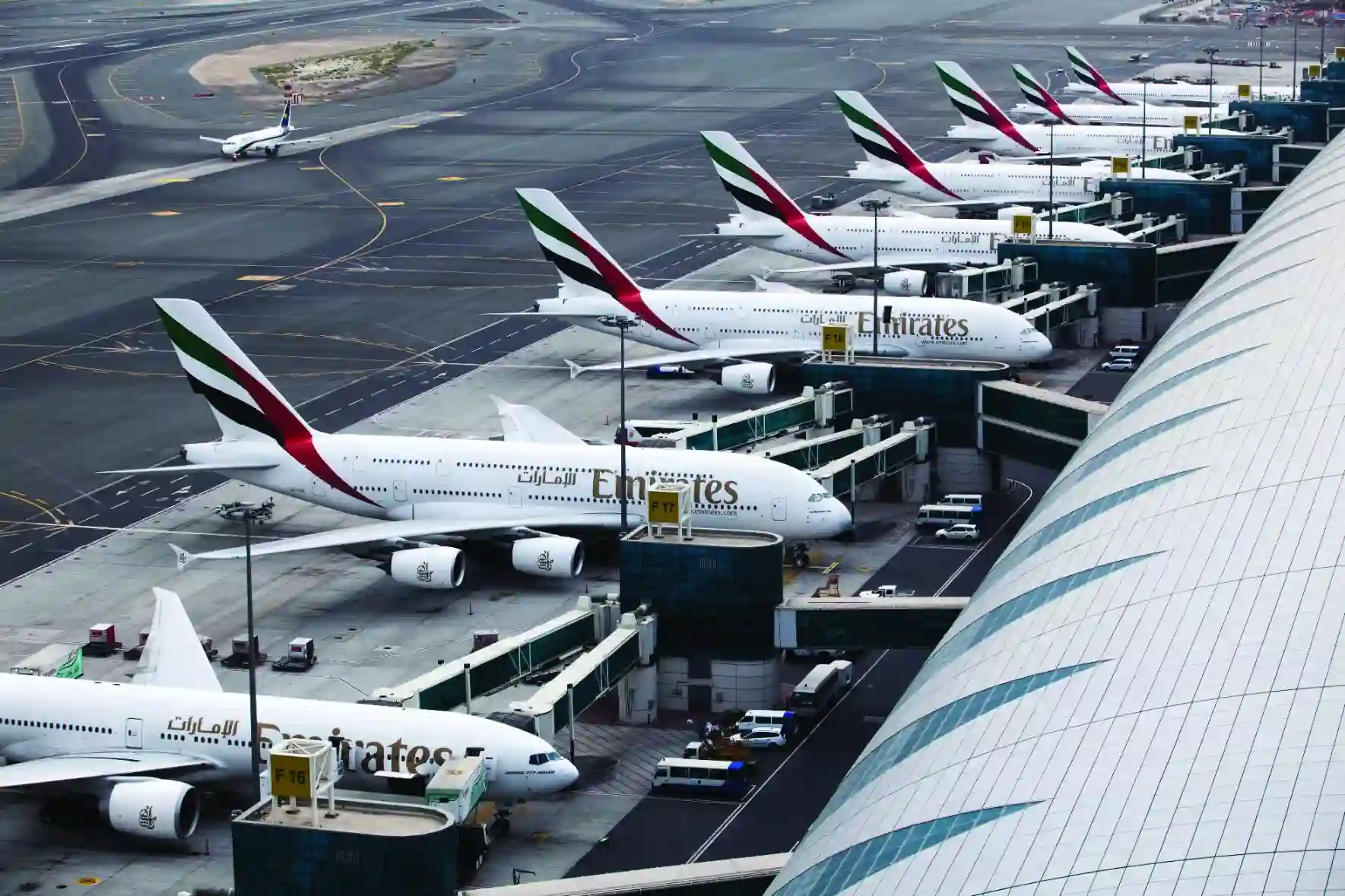
The closure was caused by escalating military conflict in the Middle East. Authorities warn, do not go to the airport unless your airline confirms your flight.
The situation remains dynamic, schedules are subject to change without notice, and the vast majority of flights remain suspended as of Tuesday, March 3.
Partially — But Do Not Go Without Airline Confirmation.
What Caused Dubai Airport to Shut Down?
The crisis began on Saturday, February 28, 2026, when the United States and Israel launched coordinated military strikes on Iran. In a swift and wide-ranging retaliation, Iran launched missile and drone strikes targeting multiple Gulf states, including the UAE, Qatar, Kuwait, and Saudi Arabia. The escalation prompted an immediate and dramatic response from aviation authorities across the region.











The UAE’s General Civil Aviation Authority (GCAA) announced a temporary partial closure of UAE airspace, described as an “exceptional precautionary measure” amid what officials called “rapidly evolving regional security developments.” Within hours, all commercial flight operations at Dubai’s two major airports were fully suspended.
Dubai International Airport, which handles more than 90 million passengers annually and is one of the busiest international aviation hubs in the world, came to a complete standstill. All arrivals and departures were halted. Passengers mid-journey were stranded. Thousands of travellers found themselves marooned in transit hotels around the UAE and beyond, with at least 20,000 passengers reported to be housed in hotels due to the closures.
The situation was further complicated when Dubai International Airport itself sustained damage during Iran’s retaliatory strikes — a stark indication of how close the conflict had come to one of the world’s most critical civilian infrastructure hubs. One fatality was reported at Zayed International Airport in Abu Dhabi during the strikes.
The Scale of the Disruption
The scale of the aviation collapse triggered by this conflict has been extraordinary. More than 11,000 flights across the Middle East were cancelled in the wake of the strikes. Aviation analysts estimated that at least 90,000 passengers per day were affected at the peak of the shutdown, as Europe-to-Asia routes were severed and airlines scrambled to reroute, divert, or simply cancel flights entirely.

At any given time, the UAE airspace closure also directly impacted nations including Bahrain, Iraq, Israel, Jordan, Kuwait, Qatar, Saudi Arabia, Syria, and Iran — effectively shutting down a massive corridor of international airspace through which tens of thousands of flights transit each year. Overflights between Europe and Asia were disrupted for days, adding 90 to 180 minutes to alternate routing for some carriers.
Limited Operations Restart: What’s Happening Now
On the evening of Monday, March 2, 2026, Dubai Airports issued a statement confirming a phased and limited restart of operations. A spokesperson said: “Dubai Airports confirms that a limited resumption of operations will begin later today, March 2, with a small number of flights permitted to operate from Dubai International (DXB) and Dubai World Central, Al Maktoum International (DWC).
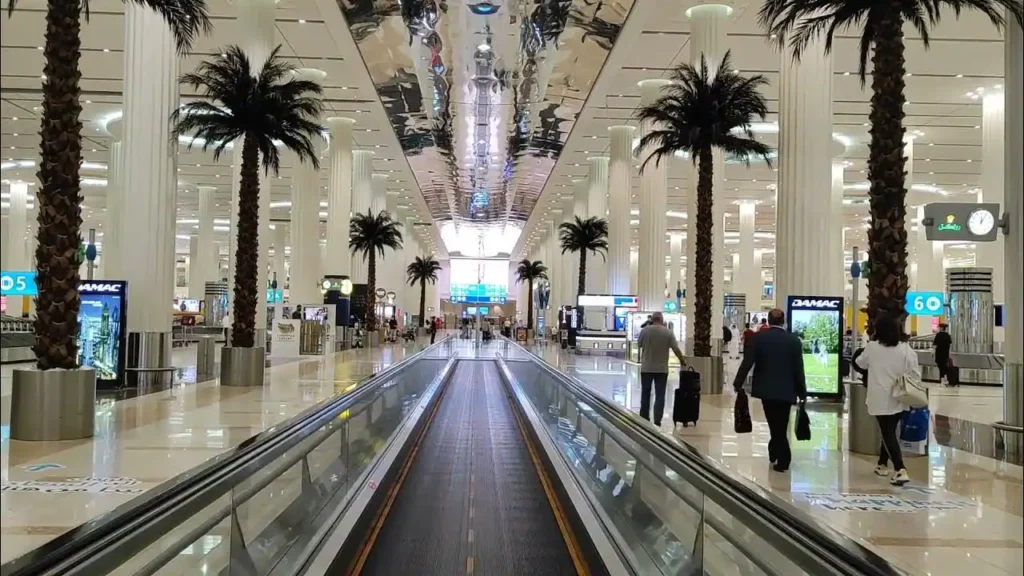
The very first commercial departure was Emirates flight EK500, which lifted off from Dubai International Airport at 9:12 p.m. local time bound for Mumbai, India, aboard an Airbus A380, the world’s largest passenger aircraft. Shortly after, a flydubai flight departed for Warsaw, Poland, in the early hours of March 3.
The UAE’s airspace has been partially reopened under restricted corridors, allowing selected routes and limited overflights. However, authorities are clear that this partial reopening does not signal a return to normal operations.
Airline-by-Airline Status
Emirates: The world’s largest international airline confirmed it will operate a limited number of flights from the evening of March 2. The airline is prioritising customers with earlier bookings, and passengers who have been rebooked will be contacted directly by Emirates. Emirates has stated explicitly: “Please do not go to the airport unless you have been notified. All other flights remain suspended until further notice.” Most Emirates routes remain cancelled as of Tuesday, March 3.
flydubai: The carrier announced limited operations beginning on the evening of March 2, focused initially on routes to Russian cities including Moscow, Kazan, Yekaterinburg, and Novosibirsk, as well as limited inbound flights from Pakistani cities including Islamabad, Multan, and Sialkot, and from Hargeisa in Somaliland. All other flydubai flights are suspended until at least 3 p.m. UAE time on Tuesday, March 3, with extensions possible.
Etihad Airways (Abu Dhabi): Etihad confirmed that some limited repatriation and cargo flights are operating in coordination with UAE authorities. However, all regular scheduled commercial flights to and from Abu Dhabi are expected to remain suspended until at least 2 p.m. on Wednesday, March 4. The airline cautioned that extensions are possible.
Air Arabia: The low-cost carrier suspended all flights to and from the UAE until 3 p.m. on Tuesday, March 3. Flights to Lebanon, Jordan, Syria, and Iraq remain suspended through March 4 due to continued airspace restrictions in those corridors.
Ras Al Khaimah International Airport: Flight operations at this smaller UAE hub remain suspended until further notice. Passengers have been advised not to proceed to the airport.
What Should Travellers Do Right Now?
If you have an upcoming flight to or from Dubai, the official guidance is unambiguous. Do not travel to DXB or DWC unless your airline has directly contacted you with a confirmed departure time. Airlines are providing the most accurate and up-to-date information regarding individual flight status. Arriving at the airport without confirmation may result in you being turned away.
Here is the official step-by-step guidance for affected passengers:
Passengers should check their airline’s official website and app for the latest flight status. They should ensure their contact details are fully up to date with the airline — this is critical, as airlines are directly contacting passengers whose flights have been rebooked onto limited services. Travellers who need to rebook should contact their airline’s customer service line or visit the airline’s official travel shop.
flydubai passengers can contact the airline’s Contact Centre in Dubai at (+971) 600 54 44 45. Emirates passengers should visit emirates.com and check their email for direct notifications. Etihad passengers should monitor etihad.com for updates.
The UAE government confirmed that accommodation and necessary assistance will be provided to stranded passengers by airlines in coordination with relevant local authorities.
The Broader Regional Picture
Dubai’s aviation disruption cannot be separated from the wider catastrophe unfolding across the Middle East. The Israel-US-Iran conflict that triggered the airspace closures has now extended to Lebanon, with Israeli air strikes reported on Beirut and southern Lebanon as of March 3. Iran continues to face strikes and has vowed further retaliation.
Qatar’s Hamad International Airport in Doha, another critical global aviation hub and home to Qatar Airways, also faced significant disruption. Qatar shot down two Iranian fighter jets during the conflict escalation, further rattling the regional security environment.
Saudi Arabia’s Ras Tanura oil refinery was shut down following a drone attack, adding commodity market concerns to the aviation chaos. War-risk insurance surcharges for airlines are rising sharply. Aviation analysts warn that escalation in the region typically triggers higher surcharges, tighter coverage terms, and increased deductibles, factors that could materially increase costs for airlines operating near the conflict zone even as operations resume.
When Will Full Operations Resume?
There is no confirmed timeline for a full return to normal operations at Dubai airport. Dubai Airports has stated it is “progressively scaling” operations in coordination with airlines and relevant authorities, with “priority being given to departing flights.” Flight movements will be gradually increased based on capacity and airspace availability.
Airlines have cautioned that even for passengers whose flights have been previously confirmed, schedules remain subject to change. The situation is being assessed continuously, and any passenger should check directly with their airline before heading to the airport — even at short notice.
Key Contacts and Resources
- Dubai Airports official updates: dubaiairports.ae
- Emirates flight status: emirates.com
- flydubai flight status: flydubai.com
- Etihad flight status: etihad.com
- flydubai Contact Centre (Dubai): (+971) 600 54 44 45
- Dubai Media Office (official announcements): @DXBMediaOffice on X (formerly Twitter)
Dubai Airports confirms that a limited resumption of operations will begin today evening, 2 March, with a small number of flights permitted to operate from Dubai International (DXB) and Dubai World Central – Al Maktoum International (DWC). Travellers are advised not to proceed to… pic.twitter.com/Ui4ZYbuRJ2
— Dubai Media Office (@DXBMediaOffice) March 2, 2026Explore Dubai
This article was compiled using verified information from:
⚠️ The situation is developing rapidly. Readers are advised to check official airline and airport channels for the most current updates before making any travel decisions.
